
A lot of news about AI filmmaking advancements and new policies around AI technology so let’s dive right in.
Welcome to WednesdAI – Pixel Dreams’ weekly update with top stories from the rapidly evolving world of Artificial Intelligence.
This Week’s Episode
This Week’s News

Top Story
🎬 KLING AI O1
Kling has launched KLING AI O1, a major update that delivers smoother motion, cleaner faces, and more stable video generation. The model adds new controls for camera movement, character actions, and scene layout, giving users far more precision. It also improves resolution, speed, and prompt accuracy, reducing the time needed to generate usable footage. For businesses, this pushes AI video closer to a practical tool for rapid content prototyping and early production work.
👉 Watch the full demo this week with our WednesdAI episode!
🔗 Read more at Kling AI 01.
The Practical Shift
🔄 MIT Study: AI Could Already Replace 11.7% of the U.S. Workforce
MIT researchers say AI is already technically capable of replacing 11.7% of the U.S. workforce, but the catch is that doing so still isn’t cheap enough for most employers to bother. The study reviewed computer-vision tasks and found that while machines can handle a lot of them, the economics rarely justify swapping humans for GPUs, at least not yet. Companies are instead in a “wait until the cost drops” holding pattern, which is basically the tech version of window-shopping. The authors warn that once prices fall, displacement could accelerate quickly, especially in industries that rely on routine visual work. For businesses, the takeaway is simple: the automation wave isn’t immediate, but planning for workforce shifts now is cheaper than pretending the future won’t arrive.
📰 Read more about it from Futurism.
🎵 Suno × Warner Bros. Music Licensing Deal
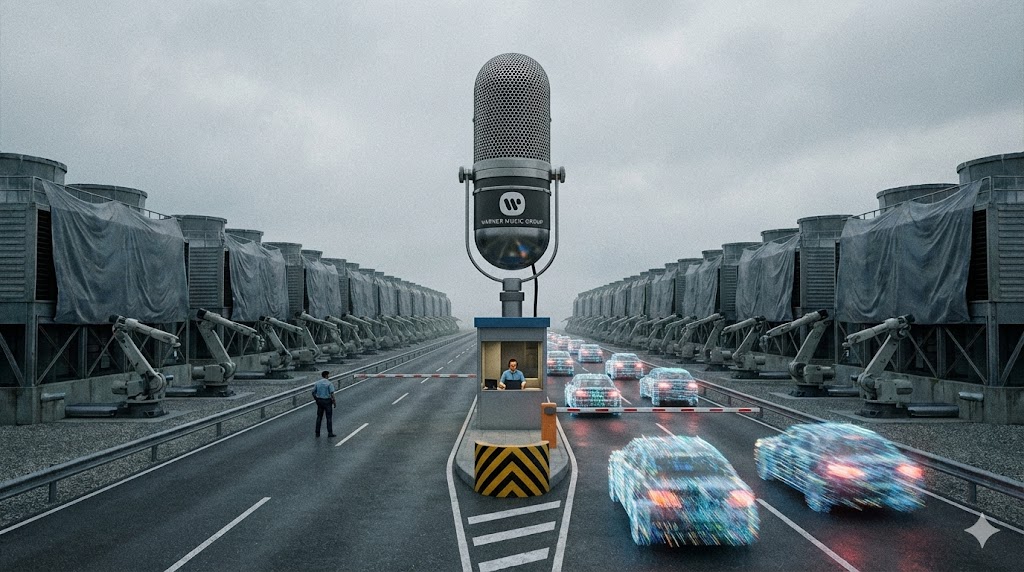
Suno has struck a licensing deal with Warner Music Group, giving the AI music generator access to parts of Warner’s catalog for training and legally sound song creation, an unusual moment when a major label chooses to cooperate rather than sue. The agreement lets artists opt in to have their work licensed for AI use, with revenue sharing built in, though the details (naturally) stay vague enough to raise eyebrows. Warner pitches this as “protecting artists,” but it also positions the label to profit from AI-made music instead of fighting its inevitability. Critics warn the deal could normalize a future where synthetic tracks flood the market under the banner of “artist-approved.” For the industry, the message is clear: labels don’t want to stop AI music, they want to own the toll booth.
📰 Read more from Warner Music Group.
The AI Reality Check
⚖️ Federal vs. State AI Regulation Clash
A brewing showdown between Washington and the states is turning AI regulation into a jurisdictional tug-of-war, with federal lawmakers pushing for a single national framework while states race ahead with their own rules. Tech companies are predictably lobbying for federal preemption, nothing says “innovation” like avoiding 50 different compliance checklists, while states argue they’re moving faster because Congress can’t agree on anything more complex than lunch. The conflict is already creating a patchwork of obligations for developers, especially around data usage, model transparency, and liability. Legal experts warn that the longer the stalemate drags on, the more likely businesses are to face regulatory whiplash. For companies betting on AI, the real risk isn’t the rules themselves, it’s not knowing which rulebook they’ll be judged by next year.
📰 Read more at TechCrunch.
📱 Influencers’ Deepfake Fandom Economy Raises Ethical Alarms
A new report highlights a booming “deepfake fandom economy,” where influencers are cashing in on AI-generated versions of themselves, even as many publicly denounce the tech. The Verge found that creators are selling AI voice clones, chatbot companions, and synthetic content to fans, blurring the line between parasocial marketing and full-on identity licensing. Critics warn the trend normalizes deepfakes at the exact moment artists and women are fighting to keep their likenesses from being exploited without consent. Platforms, unsurprisingly, are slow-walking safeguards that might disrupt a lucrative new revenue stream. For marketers, the takeaway is that AI-powered persona monetization is rising fast, but so are the ethical and reputational landmines around digital identity.
📰 Check the article from The Verge.
The Future Arrives Early
🤖 UBTech Wins $37M Deal to Deploy Humanoids at the Border
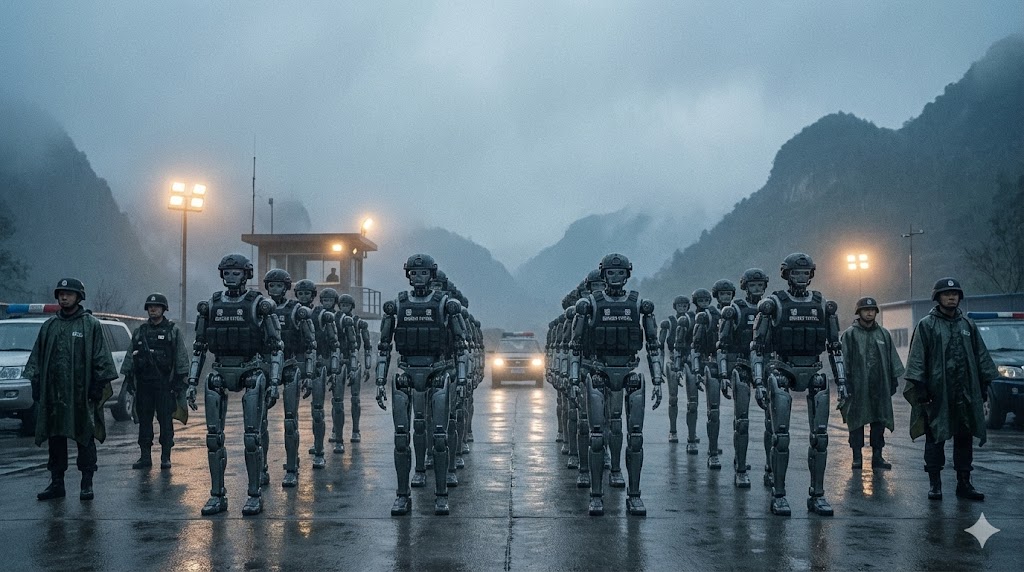
China’s UBTech has secured a 264 million yuan (US$37 million) deal to deploy its Walker S2 humanoid robots across border checkpoints in Guangxi, marking one of the country’s biggest real-world rollouts of humanoids in government operations. The robots will guide travelers, support patrols, handle logistics, and conduct industrial inspections, leveraging features like 52-degree-of-freedom arms and an autonomous self-swapping battery system that enables near-continuous operation. The deployment is part of China’s broader push to commercialize embodied AI, backed by national policy and expanding into airports, government offices, and manufacturing sites. UBTech says orders for its Walker line have already hit 1.1 billion yuan, with plans to scale production toward 10,000 units a year by 2027. For businesses, the takeaway is clear: China is rapidly turning humanoid robots from demos into infrastructure—and setting the pace for global robotics adoption.
📰 Read the article from Interesting Engineering.
🤖 ChatGPT Turns Three
ChatGPT turns three years old, marking the birthday of the chatbot that lit the fuse on the modern AI boom and rewired how people communicate, learn, and work. Its debut set off an industry-wide arms race, with every major lab scrambling to build bigger models while regulators tried (and mostly failed) to keep up. In three years it’s gone from a quirky text generator to a multimodal, enterprise-grade system powering everything from customer service to code assistants. Meanwhile, debates over accuracy, privacy, and job displacement haven’t aged a day. For businesses, the milestone is a reminder that AI moves fast, and competitors who wait around don’t.
📰 Dive into more insights from TechCrunch.
The section header images in this article were generated using the following prompts:
